
Asian Clothing Size Guide: Asian to US Sizes Explained
To choose an Asian clothing size for a US wardrobe, compare the individual product’s measurements rather than converting S, M or L automatically. Some garments run smaller; others are deliberately oversized. The most useful comparison is a similar garment you already own and like.
This Asian clothing size guide explains how to read a chart, distinguish body measurements from garment measurements, convert centimeters to inches and choose the intended fit.
- Check whether the chart gives body measurements or finished garment dimensions.
- Measure a comparable garment using the same method and units.
- Compare key dimensions, then consider the cut, fabric and room needed for layering.
Are Asian Clothing Sizes Smaller Than US Sizes?
They can be, but “Asian sizing” is not one standard. A brand’s regional sizing, the cut of a garment and its intended fit can all affect the measurements associated with S, M or L.
An oversized Medium can be wider than a fitted Large from another collection. That is why a fixed rule such as “buy one size larger” is unreliable. Check the product measurements before choosing.
Asian Clothing Size Chart: How to Compare Asian and US Sizes
There is no universal Asian-to-US clothing size conversion. Japan, Korea and China do not share one size chart, and different designers can assign different measurements to the same letter size. An Asian M, L or XL cannot be reliably converted to a US size without the specific product chart.
Use this checklist when reading a chart:
| Chart detail | What to check |
|---|---|
| Body measurements | Compare with your body; these are not the dimensions of the garment. |
| Garment measurements | Compare with a similar item you own, using the same measuring method. |
| Flat width or circumference | A flat chest width is different from the measurement all the way around. |
| CM or inches | Convert to the same unit before comparing. |
| Fit and fabric | Check fitted, relaxed or oversized construction and whether the fabric stretches. |
A Real EastLyst Trouser Size Chart
The 7440 37 1 Pleated Adjustable Utility Trousers illustrate why measurements matter. The product’s Size Chart lists the following values in centimeters:
| Size | Length | Waist | Hip | Leg opening |
|---|---|---|---|---|
| S | 107 cm | 72–84 cm | 98 cm | 42 cm |
| M | 109 cm | 76–88 cm | 102 cm | 44 cm |
| L | 111 cm | 80–92 cm | 106 cm | 46 cm |
Source: this product’s size chart, checked October 8, 2026. Its stated manual measurement variation is 1–3 cm. Check the current product page before ordering; this chart applies only to these trousers.
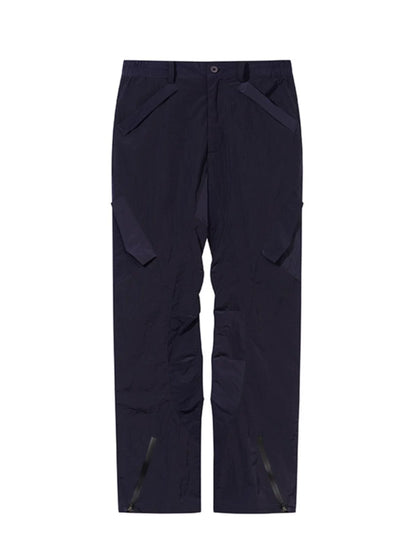
Notice that the S and M waist ranges overlap. That does not make the sizes interchangeable: the hip and length measurements also change. Compare the full chart with trousers that fit you well. Do not treat the listed Length as an inseam unless the brand specifically defines it that way.
CM to Inches: Clothing Measurement Conversion
Inches = centimeters ÷ 2.54. To convert in the other direction, multiply inches by 2.54. For example, 76 cm is about 29.9 inches, while 109 cm is about 42.9 inches. Convert the measurement, not the letter size.
The conversion factor is defined by NIST. Rounded values are useful for comparing charts, but they do not remove a garment’s measurement tolerance.
How to Measure Yourself Before Ordering
Knowing a few basic body measurements makes international online shopping significantly easier.
Use a flexible measuring tape and keep it comfortably against your body without pulling it too tightly.
Chest or Bust
Measure around the fullest part of your chest or bust while keeping the measuring tape level.
For jackets, shirts and structured tops, also pay attention to the garment's chest measurement and intended fit.
Waist
Measure around your natural waistline, usually the narrowest part of your torso.
For trousers designed to sit lower on the waist or hips, check the product measurements rather than relying only on your natural waist measurement.
Hips
Measure around the fullest part of your hips.
This is particularly important for fitted trousers, skirts and dresses.
Shoulders
Measure from the edge of one shoulder to the other across your back.
Shoulder width can significantly change the way jackets, shirts and outerwear fit — unless the piece intentionally uses a dropped-shoulder construction.
Inseam
For trousers, measure from the crotch seam down the inside of your leg to your preferred trouser length.
Remember that wide-leg, cropped and oversized trousers may intentionally use proportions that differ from conventional pants.
Body Measurements vs. Garment Measurements
This distinction is easy to miss.
A body measurement describes your body.
A garment measurement describes the actual piece of clothing.
For example, if your chest measures 96 cm, that does not necessarily mean you should look for a jacket with a 96 cm chest measurement. The garment needs additional room depending on its construction and intended silhouette.
This difference is sometimes referred to as ease.
A fitted shirt might include relatively little ease, while an oversized streetwear jacket could be intentionally much wider than your body measurement.
When comparing measurements, pay attention to whether a brand is providing:
- body measurements;
- garment measurements; or
- recommended measurements for each size.
This matters more than simply converting an Asian size L into a US size M.
Flat Chest Width vs. Chest Circumference
A chart may show chest width measured across a garment laid flat, often from armpit to armpit. If the chart explicitly defines that value as half-chest width, doubling it gives an approximate garment chest circumference. For example, 54 cm flat width is approximately 108 cm around the garment. It is not a recommended 108 cm body chest size.
Do not double a value already labeled chest circumference. If the chart only says “chest” or “bust,” check its diagram or ask for clarification before comparing it with a body measurement. The same distinction can apply to waist widths.
For a practical explanation of this distinction, see UNIQLO’s body and product measurement guidance. EastLyst products still require their own designer’s chart.
Why Every Asian Fashion Brand Can Fit Differently
A size label does not describe the entire fit. Designers may use cropped lengths, dropped shoulders, relaxed tailoring or fitted cuts. Fabric matters too: stretch knitwear and rigid denim behave differently.
Check the individual product even if you have bought from the same designer before. A size that worked for a loose shirt may not be right for a structured jacket.
Asian Streetwear Sizing Can Be Especially Different
Oversized jackets, boxy tops and wide-leg trousers use extra volume as part of their design. Sizing down can change the shape rather than simply improve the fit. Compare shoulders, sleeve and body length as well as width.
For outfit examples, see our Asian streetwear guide. Use the product photography to understand the intended silhouette, then confirm it against the measurements.
Should You Always Size Up When Buying Asian Clothing?
No.
"Always size up" is one of the most common pieces of advice about Asian clothes sizing — and it is too simplistic for contemporary fashion.
It may work for certain mass-market products that use smaller sizing specifications, but it can produce the wrong result when buying:
- oversized clothing;
- unisex garments;
- relaxed tailoring;
- wide-leg trousers;
- loose outerwear; or
- experimental silhouettes.
Instead of automatically sizing up, compare the product measurements with a similar piece of clothing you already own and like.
This is often much more reliable than comparing international size labels.
The Easiest Way to Find Your Size Online
If you're unsure about a product, take a garment you already own that fits the way you want.
Lay it flat and measure it.
Depending on the garment, useful measurements might include:
Tops and jackets: chest, shoulders, sleeve length and total length.
Trousers: waist, rise, hips, thigh, inseam and total length.
Dresses: bust, waist, hips and total length.
Then compare those measurements with the product information online.
This gives you a much better idea of the actual silhouette than simply asking whether "Asian L equals US M."
How to Choose Your Size at EastLyst
EastLyst curates clothing from multiple independent designers and emerging brands, which means sizing can vary from one collection to another.
When shopping at EastLyst:
1. Check the individual product's size information.
Treat this as more important than a generic international conversion.
2. Compare measurements with clothing you already own.
This is particularly useful for oversized and unconventional silhouettes.
3. Consider how the garment is designed to fit.
Look at the product photography and description for clues such as oversized, relaxed, fitted, cropped or wide-leg.
4. Don't automatically size up.
Let the measurements and intended silhouette guide your decision.
The goal isn't simply to find a garment that technically fits.
It's to experience the proportions and silhouette the designer intended.
Between Two Sizes? Check the Fit Before Ordering
For a fitted, non-stretch garment, pay particular attention to the most restrictive area, such as the bust, hips or thighs. For a relaxed piece, decide how much extra room you want rather than assuming a larger label will look better. Check length and sleeves too: sizing up can change more than width.
For elastic waists, check whether the chart shows an unstretched measurement, a stretched measurement or a range. If a necessary measurement is missing or ambiguous, contact EastLyst with the product name, the measurements you are comparing and your preferred fit before ordering.
Ready to compare styles? Browse women’s pants, women’s outerwear or men’s Asian streetwear, then check each item’s individual size information.
Frequently Asked Questions
Are Asian clothing sizes smaller than US sizes?
They can be, but not always. Some Asian brands use smaller sizing specifications than typical US brands, while others follow international sizing or intentionally oversized silhouettes. Always check the individual garment measurements when available.
What is an Asian size L in US sizing?
There is no dependable US equivalent for an Asian L without the specific brand and product chart. Compare its measurements with a garment that fits you, using the same units and measuring method.
Should I order one size larger when buying Asian clothing?
Not automatically. Sizing up can be useful for some fitted garments, but it may result in an excessively large fit for oversized, relaxed or unisex pieces. Compare measurements before ordering.
Are Japanese, Korean and Chinese clothing sizes the same?
No. There is no single sizing system used across all Asian countries or fashion brands. Sizing conventions can vary by market and by individual designer.
How can I convert Asian clothing sizes to US sizes?
Use international conversion charts only as a general reference. For the most accurate fit, compare your body measurements — or measurements from clothing you already own — with the measurements provided for the specific garment.
Is a 54 cm chest measurement the same as a 54 cm body chest?
No. First check how the chart defines it. A 54 cm half-chest width measured flat is approximately 108 cm in garment circumference; a 54 cm circumference is a different measurement. Neither should be used as a body-size recommendation without the chart’s fit guidance.
Can height and weight alone tell me which size to buy?
They can provide context, but they do not show your waist, hips, chest or preferred silhouette. Use the relevant measurements and product chart to make the final comparison.