
Asian Streetwear: A Guide to Asian Street Fashion, Brands & Style
Asian streetwear combines relaxed proportions, layering, utility details and personal styling. From Tokyo’s experimental combinations to Seoul’s clean silhouettes and China’s independent designer scene, Asian street fashion includes many different approaches. This guide explains the key elements and shows how to build wearable outfits with clothing from EastLyst.
Cover styling references: Elio Cheng / Hypebeast, Shanghai Fashion Week SS26; edited collage. The photographed outfits are not EastLyst product shots.
What connects these different scenes is an openness to experimentation. Oversized jackets meet tailored trousers, vintage references sit alongside technical fabrics, and sneakers are styled with almost everything.
If you're exploring Asian streetwear for the first time, this guide breaks down the key styles, influences and outfit ideas — and how to make them your own.
What Is Asian Streetwear?
Asian streetwear is a broad term used to describe contemporary street fashion influenced by cities and creative communities across Asia.
Unlike a single fashion movement, it includes many different aesthetics. Japanese streetwear often draws from subcultures, vintage clothing and experimental design. Korean street fashion tends to favor cleaner silhouettes and accessible oversized styling, while contemporary Chinese streetwear increasingly combines global influences with local design, graphics and cultural references.
The result is a fashion category built around individuality rather than strict rules.
Some of its most recognizable elements include oversized silhouettes, wide-leg trousers, layering, sneakers, utility details, neutral palettes and unexpected combinations of casual and tailored pieces.
Build your wardrobe around pieces you will actually wear. Browse EastLyst’s women’s Asian streetwear and men’s Asian streetwear for relaxed trousers, statement outerwear and everyday layers.
Tokyo, Seoul & China: Three Different Streetwear Perspectives
There isn't one definitive “Asian streetwear look.” Some of the most influential scenes have developed very different visual languages.
Tokyo: Experimental & Layered
Tokyo street fashion has long been associated with experimentation.
Layering, unusual proportions, vintage pieces, graphic details and references to punk, workwear, Americana and Japanese subcultures often appear in the same outfit.
Instead of building a look around one trend, Tokyo style frequently feels collected over time. A technical jacket might sit over a vintage graphic tee, paired with extremely wide trousers and unexpected footwear.
The key idea: individuality over uniformity.
Seoul: Clean & Oversized
Seoul streetwear often takes a more polished approach.
Oversized jackets, loose trousers, simple T-shirts, hoodies and sneakers create relaxed silhouettes without requiring complicated styling.
Neutral colors such as black, grey, navy, cream and washed tones make different pieces easy to combine.
The result is a style that feels contemporary and visually strong while remaining wearable.
The key idea: proportion over decoration.
China: New Designers & Cultural Fusion
China's streetwear and independent fashion scene has expanded rapidly, particularly in cities such as Shanghai, Beijing, Shenzhen and Chengdu.
A new generation of designers is mixing streetwear with technical clothing, contemporary tailoring, graphic design and references to Chinese culture.
Rather than simply reproducing Japanese, Korean or Western streetwear, many emerging labels are developing their own visual identity.
The key idea: global influence with a local point of view.
5 Elements of Asian Streetwear Style
You don't need an entirely new wardrobe to experiment with Asian street fashion. Start with a few styling principles.
1. Play With Proportions
One of the easiest ways to change an outfit is through silhouette.
Try an oversized jacket with wide trousers, or contrast a fitted top with a dramatically loose bottom.
The goal isn't simply to buy everything oversized — it's to create an intentional relationship between different proportions.
2. Master Layering
Layering adds depth without relying on loud graphics.
Try combining different lengths and textures: a T-shirt under an open shirt, a hoodie beneath a structured jacket, or a longer inner layer underneath cropped outerwear.
For an outdoor-inspired layer, explore the Unisex Hard Shell Jacket in gray or black. Check the garment chest and sleeve measurements, leaving room for your intended inner layers.
3. Build Around Wide-Leg Pants
Wide-leg trousers, relaxed jeans and cargo pants are some of the easiest foundations for an Asian streetwear-inspired outfit.
They immediately change the silhouette and work particularly well with oversized tops and sneakers.
For a retro denim outfit, explore our brown Vintage Flare Jeans. Pair the washed finish with a simple tee or cropped jacket, and compare the waist, hip and length measurements before choosing your size.
4. Mix Streetwear With Tailoring
Streetwear doesn't have to mean hoodies from head to toe.
A blazer with loose trousers and sneakers can look just as relevant as a bomber jacket with tailored pants.
Mixing formal and casual pieces often creates a more interesting outfit than staying inside one category.
In warmer weather, try the Black PU Leather Pleated Bermuda Shorts with a simple tee or shirt. Their pleated shape adds structure; compare the waist and length measurements before choosing a size.
5. Keep Branding Secondary
Good street style doesn't require huge logos.
Silhouette, texture, layering and proportion usually have a bigger impact than branding. A simple outfit with strong proportions can feel more considered than an outfit built entirely around recognizable logos.
How to Style Asian Streetwear: 3 Everyday Outfit Ideas
Choose one starting point: a cropped jacket, a wide trouser leg or a contrasting inner layer. These outfit formulas use clothing available at EastLyst; the cover photographs are street-style references rather than photographs of these products.
1. Cropped Corduroy Jacket + Wide-Leg Workwear Pants
The formula: a cropped jacket, a plain tee, washed wide-leg pants and simple sneakers.
The VLABMADE Western Faux-Leather Collar Corduroy Jacket has a boxy, cropped shape, washed cotton corduroy and a contrasting faux-leather collar. Its shorter length gives wide trousers room to define the silhouette without hiding the waist completely.

Pair it with the VLABMADE Distressed Wide-Leg Parachute Pants. Their washed cotton twill and distressed finish continue the workwear feel. Keep the tee and shoes simple so the contrast between the corduroy and worn-in pants remains the focus.

Fit tip: a little stacking can suit this look, but the hem should not drag beneath your heel. Check the listed trouser length before choosing a size.
2. Mesh-Panel Long-Sleeve Tee + Pleated Utility Trousers
The formula: a navy-and-grey long-sleeve tee, relaxed utility trousers and understated sneakers.
For a quieter take on Asian street fashion, combine the 7440 37 1 Navy Grey Mesh Panel Long-Sleeve T-Shirt with the 7440 37 1 Pleated Adjustable Utility Trousers. The tee combines contrasting fabrics and mesh paneling at the waist; the trousers add inward pleats and thigh patch pockets. The interest comes from shape and construction rather than large graphics.
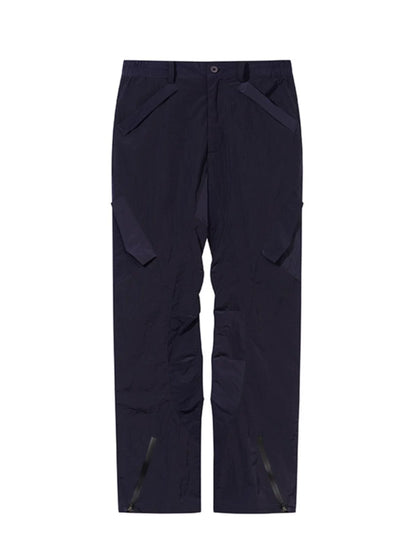
Styling tip: use the trouser hem zippers to adjust the leg opening around your footwear. Try a more open hem for a flowing silhouette or a narrower opening to make the shoe more visible.
3. Textured Jacket + Contrasting Sportswear Layer
The formula: a corduroy jacket worn open, a mesh-panel long-sleeve tee, relaxed trousers and sneakers.
Use the VLABMADE jacket from the first outfit over the 7440 navy-and-grey long-sleeve tee. The contrast between corduroy and mesh creates depth without adding another print. Wear the jacket open so the inner layer is visible, and keep accessories restrained.

Seasonal adjustment: in warmer weather, leave off the jacket and keep the trousers as the focal point. In cooler weather, check that your outer layer has enough room at the shoulders and sleeves to avoid bunching.
Asian Streetwear Is More Than One Trend
One reason Asian street fashion continues to evolve is that it doesn't belong to a single city, brand or aesthetic.
Tokyo can be experimental. Seoul can be minimal. Shanghai can be futuristic. Bangkok can be playful.
But even those descriptions are simplifications.
The most interesting streetwear comes from people taking influences from different places and turning them into something personal.
That's also why you don't need to recreate a specific “Asian look.” Use the references you like, ignore the ones you don't, and build around clothing that fits your own lifestyle.
How to Choose the Right Streetwear Fit
Oversized is a silhouette, not an instruction to buy two sizes larger. Compare each product’s measurements with a similar garment you already own. For trousers, check the waist, rise, thigh and length; for outerwear, check the shoulders, chest and sleeve length.
If you plan to layer a hoodie or long-sleeve tee beneath a jacket, allow room for that layer. For a cropped jacket, check the body length as well as the chest measurement. EastLyst’s Asian clothing size guide explains how to approach Asian-to-US sizing; the individual product chart should guide your final choice.
Asian Streetwear FAQ
What is the difference between Asian streetwear and Asian street fashion?
Asian street fashion is the broader term for everyday fashion seen across Asian cities and communities. Streetwear is one part of it, often associated with casual clothing, sneakers, relaxed silhouettes and influences from youth culture. The terms overlap, but neither describes a single uniform style.
Do I need designer brands to wear Asian streetwear?
No. Start with proportion, texture and fit. A plain tee, well-chosen wide-leg trousers and a jacket with a clear shape can create a strong outfit without prominent logos.
How can I wear oversized clothing without looking shapeless?
Give the outfit a clear point of structure. Try a cropped jacket over wide trousers, a fitted inner layer beneath loose outerwear, or an open jacket that shows the waist and layers underneath. Avoid choosing every piece purely for its size.
What shoes work with wide-leg streetwear pants?
Sneakers are an easy starting point. A low-profile pair keeps the outfit understated; a chunkier sole creates more visual weight beneath wider hems. Check where the trouser hem falls with the shoes on, and keep it clear of the ground.
Shop Asian Streetwear at EastLyst
Start with one useful addition to your wardrobe, then build around it. Explore women’s Asian streetwear or men’s Asian streetwear. For a trouser-led outfit, browse women’s pants; for a new top layer, explore women’s outerwear.
The product photographs above show EastLyst’s selected pieces. Use the street-style cover for inspiration, and choose the fit, layers and color combinations that work for your own wardrobe.